

The Evolution of File Tracking Technology
In an era where efficiency and accuracy are paramount, traditional barcode systems for file tracking are increasingly being outpaced by more advanced RFID technology. While barcodes have served organizations well for basic identification, RFID offers transformative advantages that make it the superior choice for modern document management. This comprehensive article explores why RFID technology represents the future of file tracking and why organizations should consider making the switch.
RFID (Radio-Frequency Identification) technology provides automated, real-time tracking capabilities that barcode systems simply cannot match. By eliminating manual scanning requirements and enabling hands-free operation, RFID delivers significant improvements in operational efficiency, security, and cost-effectiveness.
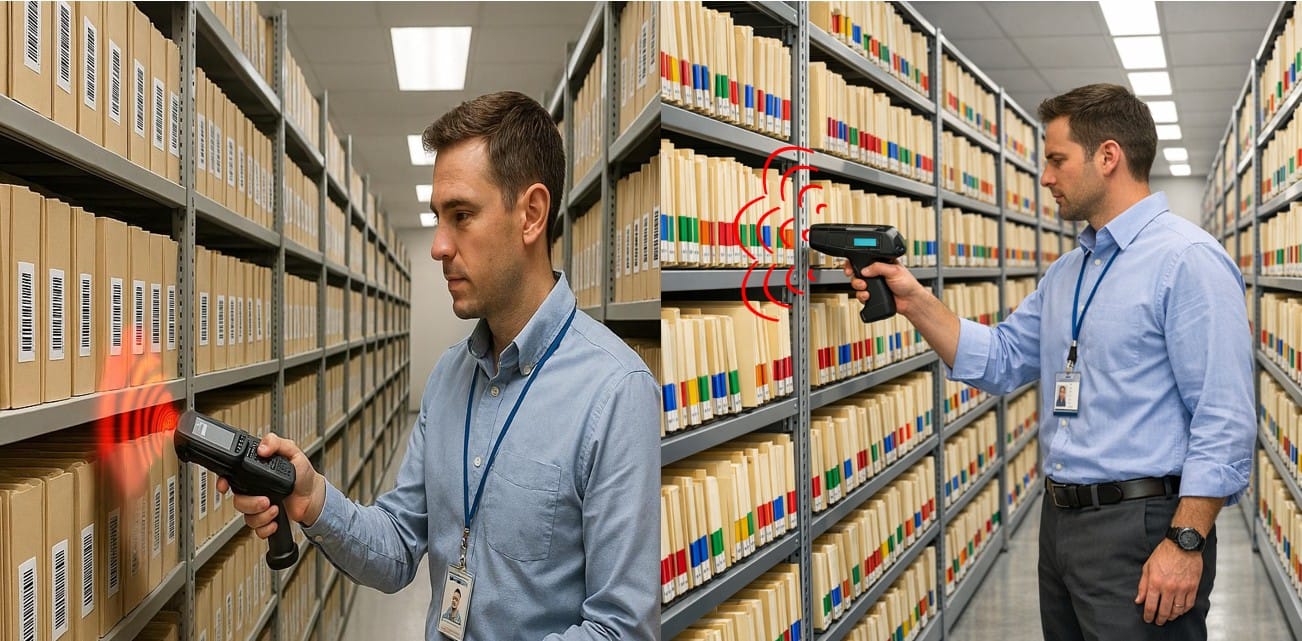
Table of Contents
Key Advantages of RFID Over Barcode
RFID technology offers several compelling advantages that make it the preferred choice for organizations serious about optimizing their file tracking processes.
Superior Automation and Efficiency
Unlike barcode systems that require manual scanning and line-of-sight alignment, RFID enables hands-free, automatic tracking. Files equipped with RFID tags are detected and recorded as they pass through RFID enabled areas, eliminating the need for staff to stop and scan each item individually. This automation reduces processing time by up to 90% and minimizes human error in data entry.
Real-Time Location Tracking
RFID provides continuous, real-time visibility into file locations and movements. Strategic placement of RFID readers throughout facilities ensures that file positions are updated instantly as items move between departments, rooms, or storage areas. This level of real-time tracking is simply not possible with barcode systems, which only capture data during manual scanning events.
Bulk Processing Capabilities
One of RFID's most significant advantages is its ability to read multiple tags simultaneously. While barcode scanners can only process one item at a time, RFID readers can capture data from dozens or hundreds of tagged files in a single pass. This bulk processing capability dramatically accelerates inventory audits, file searches, and checkout procedures.
Enhanced Durability and Reliability
RFID tags are more durable than barcode labels, which can become damaged, dirty, or unreadable over time. RFID technology works reliably even when tags are covered by other materials (such as dust, dirt, or plastic) or positioned at various angles, ensuring consistent performance in demanding environments. Additionally, RFID eliminates scanning failures due to poor lighting or label damage.
Advanced Security Features
RFID enables sophisticated security measures that barcode systems cannot match. Automated detection of unauthorized file movements, real-time alerts for security breaches, and tamper-proof audit trails provide superior protection for sensitive documents. RFID readers at exit points can prevent the removal of restricted files or sensitive documents and maintain complete chain-of-custody records.
Limitations of Barcode Technology
While barcode systems have served organizations adequately for basic tracking needs, they come with significant limitations that become apparent in high-volume or complex file management scenarios.
- Manual Operation: Requires line-of-sight scanning and manual intervention for each item
- Single-Item Processing: Can only scan one barcode at a time, limiting efficiency
- Environmental Sensitivity: Barcodes can fail due to damage, dirt, or poor printing
- Limited Automation: Cannot provide real-time, continuous tracking
- Security Gaps: Manual processes create opportunities for oversight and unauthorized access
These limitations make barcode systems increasingly inadequate for modern organizations dealing with large volumes of files and complex tracking requirements.
Cost-Benefit Analysis: RFID vs Barcode
While RFID systems typically have higher initial implementation costs than barcode solutions, the long-term benefits and ROI are compelling. Organizations can expect to recover their RFID investment within 12-18 months through:
- Labor Cost Savings: Reduced time spent on manual scanning and file searches
- Error Reduction: Fewer mistakes in file tracking and inventory management
- Productivity Gains: Staff can focus on core tasks rather than administrative work
- Loss Prevention: Decreased file misplacement and theft through better tracking
- Compliance Benefits: Improved audit trails and regulatory compliance
The total cost of ownership for RFID is often lower than barcode systems when factoring in long-term operational efficiencies and reduced risk of file loss.
Implementation and Transition Strategies
Transitioning from barcode to RFID systems requires careful planning but can be accomplished smoothly with the right approach. Key considerations include:
- Phased Implementation: Start with pilot programs in high-traffic areas
- Staff Training: Comprehensive training programs to ensure user adoption
- System Integration: Seamless integration with existing document management systems
- Data Migration: Efficient transfer of existing file tracking data
- Change Management: Clear communication of benefits and support during transition
Many organizations choose hybrid approaches initially, using RFID for automated processes while maintaining barcode capabilities for specific applications.
Industry Applications and Benefits
RFID technology delivers particular value in industries with demanding file tracking requirements:
- Legal Firms: Ensures complete chain-of-custody for case files and evidence
- Healthcare: Tracks patient records and medical documents with enhanced security
- Government: Manages classified documents and maintains regulatory compliance
- Financial Services: Protects sensitive client information and audit trails
- Large Enterprises: Manages extensive document archives efficiently
Each of these sectors benefits from RFID's automation, security, and efficiency improvements over traditional barcode systems.
Conclusion: The Future of File Tracking
RFID technology represents a clear advancement over barcode systems for file tracking, offering superior automation, real-time capabilities, and enhanced security. While barcode systems may suffice for basic, low-volume tracking needs, organizations seeking to optimize their document management processes will find RFID to be the more effective and future-proof solution.
The initial investment in RFID technology pays dividends through improved operational efficiency, reduced costs, and enhanced compliance. As file volumes continue to grow and tracking requirements become more complex, RFID's advantages become increasingly compelling.
Ready to Upgrade Your File Tracking?
Discover how RFID technology can transform your document management processes. Contact GOBO Systems today for a comprehensive assessment and implementation plan.
Learn more about our RFID File Tracking System and see the difference RFID makes.