Introduction
A records retention policy defines how long organizations must keep business documents and when they should be disposed of. Proper record management helps ensure legal compliance, reduce storage costs, and improve operational efficiency. Keeping records longer than necessary can lead to increased storage costs, security risks, and compliance violations. Conversely, destroying records too soon can result in loss of valuable information and potential legal issues. This blog explains what a records retention policy is, why it matters, how to create one, and examples of retention schedules used by businesses. This also explains why destruction of physical files is important and how to manage the entire retention and destruction process efficiently.
Table of Contents
- What is Documents and Records Retention Policy and Why It Matters?
- The Challenges of Managing Retention Policies and Destruction Processes Manually
- Key Components of Effective Retention Policies and Destruction Management
- Benefits of Automated Management of Retention Policies and Destruction Processes
- Best Practices for Management of Retention Policies and Destruction Processes
- Use of RFID Technology for Management of Retention Policies and Destruction Processes
- Examples of Retention Schedules
- Why GOBO Systems for The Automated Management of Retention Policies and Destruction Processes?
- Conclusion
- Frequently Asked Questions
What is Documents and Records Retention Policy and Why It Matters?
A documents and records retention policy is a set of guidelines that determine how long an organization must keep business records and when those records should be securely destroyed. The documents and records retention policies help companies comply with legal, regulatory, and operational requirements.
Managing the retention and destruction of documents and records is a critical aspect of records management for many organizations, including government agencies, legal firms, healthcare organizations, financial institutions, and corporate enterprises. Organizations must balance competing requirements: retaining records long enough to meet legal, regulatory, and business requirements, while destroying them promptly when retention periods expire to reduce storage costs, minimize data breach risks, and ensure privacy compliance.
Managing file retention schedules and destruction process or workflows manually using spreadsheets and paper logs creates significant challenges. Organizations struggle with inconsistent retention policies, missed destruction deadlines, inadequate destruction documentation, compliance violations, and excessive storage costs. Without proper systems, documents and records are often retained longer than required "just in case" leading to unnecessary storage expenses, increased security risks, and potential legal liabilities.
Modern file tracking system with automated retention and destruction management capabilities provides a comprehensive solution. These systems automatically track file ages, monitor retention schedules, generate necessary alerts, maintain audit trails, and document the entire process.
With modern file tracking systems having retention and destruction management capabilities, organizations achieve consistent compliance, reduced storage costs, improved security, simplified audits, and comprehensive documentation of their records management practices. This systematic approach is becoming essential for modern records management and regulatory compliance.
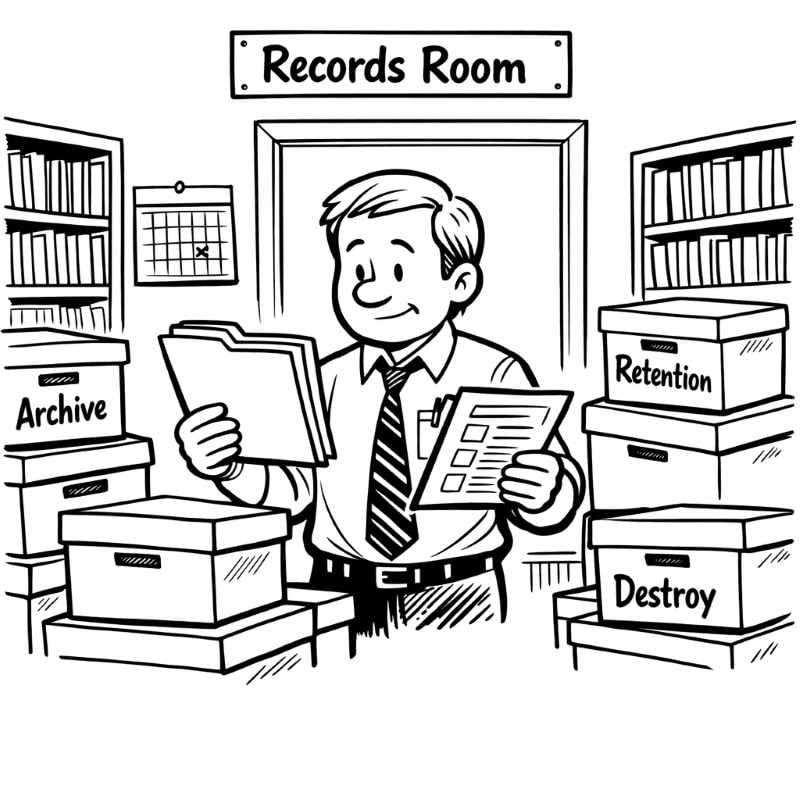
The Challenges of Managing Retention Policies and Destruction Processes Manually
Managing file retention and destruction manually presents numerous challenges that impact compliance, costs, and security. Understanding these challenges highlights the need for a file tracking system with proper retention policies and secure destruction processes.
Different Retention Policies in Departments
Without centralized management, different departments often apply different retention policies to similar document types. This inconsistency creates compliance risks, audit failures, and legal vulnerabilities. Some departments may destroy records prematurely while others retain them longer than needed, both creating potential problems.
Missed Destruction Deadlines
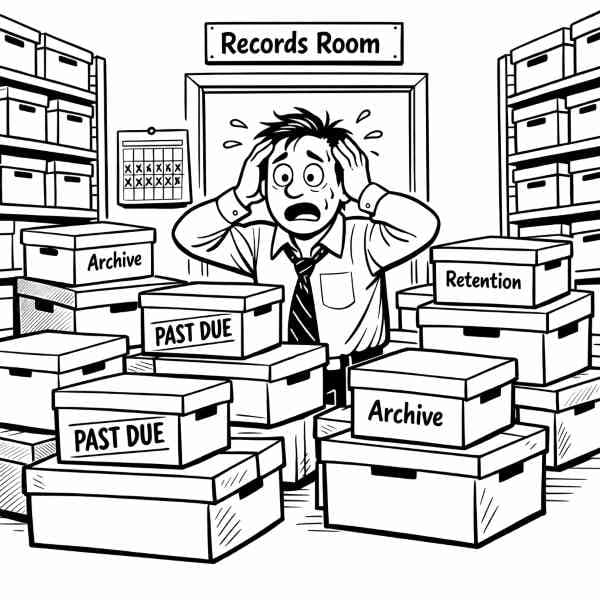
Tracking retention periods manually makes it easy to miss destruction deadlines. Organizations end up retaining files far longer than necessary, wasting valuable storage space and increasing security risks. Without automated alerts, files those should be disposed of continue accumulating, driving up costs and complexity.
Incomplete and Inadequate Destruction Documentation
Manual destruction processes rarely maintain proper documentation and audit trails. Organizations cannot prove that files were destroyed securely, according to schedule, and in compliance with policies. During audits or legal proceedings, this lack of documentation creates significant liability risks.
Extra Storage Costs Due to Missed Destruction Deadlines
When files are retained longer than necessary, organizations pay unnecessary storage costs for physical space, climate control, and facilities management. These costs accumulate year after year, representing significant wasted resources that could be eliminated with proper retention management.
Increased Security and Privacy Risks
Retaining files beyond their useful life increases data breach risks and privacy exposure. Older files are more likely to be forgotten, poorly secured, and vulnerable to unauthorized access. Organizations face greater liability when sensitive information is retained unnecessarily, especially under privacy regulations like GDPR, HIPAA, and CCPA.
Compliance Violations and Legal Risks
Failure to follow proper retention policies and destruction processes can result in regulatory fines, failed audits, and legal sanctions. During litigation, organizations that cannot demonstrate proper records management may face spoliation charges, adverse inference rulings, and increased liability. Conversely, premature destruction can eliminate evidence needed for legal defense.
Difficulty Identifying Files for Destruction
Without a proper file tracking system with necessary capabilities, identifying which files have reached their retention period is extremely time-consuming. Staff must manually review file metadata, calculate retention periods, and cross-reference policies—a process that is error-prone and often incomplete, resulting in inconsistent destruction practices.
Challenge of Legal Hold Management
Manual systems struggle to manage legal holds and litigation preservation requirements. When files are subject to legal proceedings, they must be preserved regardless of retention schedules. Without automated tracking, organizations risk destroying files that should be preserved, creating serious legal consequences. This is a big challenge for organizations that have large volumes of physical files and complex legal hold requirements.
Inefficient and Inconsistent Destruction Processes
Coordinating and managing destruction of records and documents involves multiple steps: identification, approval, secure removal, transportation, shredding, and documentation. Manual coordination of these steps is inefficient, often delayed, and difficult to track, leading to backlogs and incomplete destruction projects.
Key Components of Effective Retention Policies and Destruction Management
Implementing comprehensive retention policies and destruction management requires several key components working together:
1. Record Classification
Record classification is the process of organizing business records into defined categories based on their content, purpose, sensitivity, and retention requirements. Proper record classification is essential for effective retention and destruction management. A proper system system helps organizations manage information efficiently, comply with legal obligations, and ensure that records are stored, accessed, and disposed of according to established policies. By classifying records, organizations can determine how long each type of record should be retained, who is authorized to access it, and what level of protection it requires. Various classification categories may include administrative records, financial records, personnel records, legal records, human resources records, customer data, and more. This classification enables organizations to apply appropriate retention schedules and destruction policies consistently.
2. Define Retention Schedules
Organizations must establish clear retention schedules for all document types based on legal requirements, regulatory mandates, and business needs. Retention schedules specify how long each document category must be kept and when destruction is permitted. These schedules should be regularly reviewed and updated as laws and regulations change.
3. Automated Tracking of Document Age
File tracking systems automatically calculate record age and retention period expiration based on creation dates and applicable retention schedules. The system continuously monitors all records and identifies those approaching or exceeding their retention periods, eliminating manual tracking requirements.
4. Automated Alerts and Notifications
Automated alerts notify records managers when records become eligible for destruction. Alerts can be configured at multiple intervals (e.g., 90 days before expiration, at expiration, and overdue), ensuring timely action. This proactive notification system prevents records from being retained unnecessarily.
5. Legal Hold Management
The system must support legal hold flagging that prevents destruction of records subject to litigation, investigations, or regulatory proceedings. Records under legal hold are automatically excluded from destruction workflows until the hold is released, ensuring preservation of relevant evidence.
6. Approval Process To Manage Record Destruction
Before records are destroyed, organizations typically require supervisory approval and review. Automated workflows route destruction requests to appropriate approvers, maintain approval documentation, and ensure that only authorized personnel can approve record destruction, creating proper controls and accountability.
7. Secure Destruction Process
Physical records must be destroyed using secure methods like cross-cut shredding, pulping, or incineration. The system should track which records are sent for destruction, who transported them, when destruction occurred, and provide certificates of destruction from service providers, creating complete chain-of-custody documentation.
8. Comprehensive Audit Trail
Every step of the retention and destruction process must be logged and documented. Audit trails capture who identified records for destruction, when approval was granted, how records were destroyed, and when certificates were received. This documentation is essential for compliance audits and legal defense.
9. Reporting and Analytics
Management needs visibility into destruction activities, pending destructions, retention compliance rates, and storage cost savings. Comprehensive reporting helps organizations measure retention program effectiveness, identify bottlenecks, and demonstrate compliance to auditors and regulators.
Benefits of Automated Management of Retention Policies and Destruction Processes
Implementing automated retention and destruction management delivers significant benefits:
- Regulatory Compliance
It becomes a big issue if the records or documents which should have been destroyed are not destroyed and retained longer than necessary. This can lead to hefty penalties from regulatory bodies. Automated retention and destruction management ensures that files are destroyed according to established schedules, reducing compliance risks, minimizing security exposures, and eliminating unnecessary storage expenses. Automated systems ensure all files are managed according to retention policy, eliminating inconsistencies and reducing compliance risks.
- Reduced Storage Costs
Destorying records and documents that have reached their retention periods frees up valuable storage space and eliminates ongoing storage costs for these documents. Automated alerts from File Tracking System about retention schedules ensure that files are destroyed on time, preventing unnecessary extra costs and reducing expenses for physical storage, climate control, and facilities management.
- Improved Security
Destroying files on time when retention periods expire minimizes data breach exposure to larger extent. Older files are more likely to be forgotten and misplaced or left in unsecured locations and vulnerable to unauthorized access which can lead to data breaches. File Tracking System with Automated retention management capabilities ensures that files are not retained longer than necessary, reducing the risk of data breaches and privacy violations.
- Complete Audit Trails
Comprehensive documentation of all retention and destruction activities provides evidence of compliance for audits and legal proceedings.
- Reduced Manual Effort
Automated alerts for retention expiry, and detailed reporting eliminate effort of manually tracking spreadsheets and hence reduce staff time spent on retention management activities.
- Legal Hold Protection
Proper legal hold management prevents accidental destruction of files subject to litigation or investigation, protecting against spoliation claims and ensuring preservation of critical evidence.
Best Practices for Management of Retention Policies and Destruction Processes
Organizations implementing retention and destruction management should follow these best practices:
Develop Comprehensive Retention Schedules
Work with legal counsel and compliance officers to establish retention schedules that meet all legal, regulatory, and business requirements. Document the rationale for each retention period and review schedules regularly to ensure they remain current with changing laws and organizational needs.
Classify All Documents
Assign every file to a specific retention category when it is created or received. Proper classification ensures the correct retention schedule is applied. Use standardized classification schemes and train staff on proper document categorization.
Implement Approval Processes
Require supervisory approval before any file destruction. Implement multi-level approval workflows for high-value or sensitive documents. Document all approvals and maintain clear accountability for destruction decisions.
Use Certified Destruction Services
Engage professional document destruction vendors who provide certificates of destruction, maintain proper security, and follow industry best practices. Verify vendor credentials, insurance, and compliance certifications before engagement.
Maintain Complete Documentation
Document every aspect of the retention and destruction process: retention schedules, classification decisions, destruction approvals, transport logs, certificates of destruction, and audit trails. This documentation is essential for compliance and legal defense.
Conduct Regular Audits
Perform periodic audits to verify compliance with retention policies, identify files overdue for destruction, review legal hold management, and assess program effectiveness. Use audit findings to improve processes and address compliance gaps.
Train Staff Regularly
Provide ongoing training to staff on retention policies, proper file classification, legal hold procedures, and destruction processes. Ensure all employees understand their responsibilities and the importance of compliance.
Use of RFID Technology for Management of Retention Policies and Destruction Processes
The file tracking systems using RFID technology significantly enhance and streamline the management of retention policies and destruction processes.
- Automated file identification for destruction without manual searching
Using mobile app and RFID handheld scanner, staff can quickly identify files that have reached their retention period and are eligible for destruction, eliminating the need for manual review of file metadata and retention schedules. Users can also check whether the file is under legal hold or not, ensuring that files subject to litigation are not accidentally destroyed. Mobile Apps with RFID scanner can also capture photographic evidence of files collected for destruction, providing additional documentation for compliance. If files need approval, staff can quickly request for approval through the mobile app, and approvers can review and approve destruction requests on the go, streamlining the entire process. The entire audit trail of the destruction process is automatically documented in the system, providing comprehensive evidence of compliance for auditors and regulators. - Bulk scanning of files designated for destruction using handheld RFID readers
Instead of scanning files one by one, staff can simply pass a handheld RFID reader near a batch of files, and the system instantly identifies all tagged files for destruction, verifies they are approved, and confirms they are not under legal hold. This technology eliminates manual file-by-file verification, dramatically accelerating the destruction process while maintaining complete accuracy and compliance. - Real-time tracking of files from identification through final destruction
The system tracks the entire lifecycle of files designated for destruction: from identification, approval, collection, transportation, to final destruction. This comprehensive tracking ensures that nothing falls through the cracks and provides complete documentation for auditors, regulators, and legal proceedings. - Automatic audit trail generation documenting the entire destruction process
The system automatically generates a detailed audit trail for every step of the destruction process, ensuring transparency and accountability. - Integration with destruction workflows and approval systems
The RFID file tracking system with retention policy management and destruction capabilities provides approval workflows and captures audit trails for every step of the process. The system routes destruction requests to appropriate supervisors, maintains approval documentation, and ensures that only authorized personnel can approve file destruction. This creates proper controls and accountability while streamlining the entire process. The system should also provide integration with destruction service providers to capture certificates of destruction, providing complete chain-of-custody documentation. - Verification that all designated files were actually destroyed
The file tracking system should integrate with destruction service providers to capture certificates of destruction. This ensures that all files designated for destruction were actually destroyed according to schedule and in compliance with policies, providing evidence of compliance for auditors and regulators. If files are destroyed in-house, staff can use the mobile app to verify that the correct files were collected for destruction and capture photographic evidence, ensuring that the destruction process is properly documented and compliant with policies. System should have feature to capture evidence of destruction, such as photos of shredded documents or certificates of destruction from service providers, providing additional documentation for compliance and legal defense.
RFID technology transforms retention management from a manual, error-prone process into an automated, reliable system that ensures consistent compliance and comprehensive documentation.
Examples of Retention Schedules
The retention schedules vary by record type. They can be different based on industry regulations, organizational policies, and legal requirements.
| Record Type | Retention Period |
|---|---|
| Tax Records | 7 years |
| Employee Records | 7 years after termination |
| Medical Records (HIPAA) | 7-10 years |
| Legal Case Files | Permanently or 10+ years |
| Financial Statements | 7 years |
| Contracts | 7 years after expiration |
| Personnel Files | Varies by law |
Why GOBO Systems for The Automated Management of Retention Policies and Destruction Processes?
Our RFID File Tracking System provides following capabilities for the management of document retention policies and destruction processes:
- Comprehensive Document Retention Policy Management
Our system provides configurable document retention policy management that allows organizations to define retention schedules based on document types, legal requirements, and business needs. The system automatically applies appropriate retention schedules based on file classification, calculates retention expiration dates, and continuously monitors all files across the organization. You can configure retention rules based on creation date, closure date, or last modified date, ensuring flexibility to meet diverse compliance requirements.
- Timely Alerts and Notifications System
Our File Tracking System generates automated alerts and notifications to records managers when files approach their retention periods. These alerts and notifications can be configured at multiple intervals e.g. 90 days before expiration, 60 days before expiration etc., at expiration, and for overdue files, ensuring that records managers never miss destruction deadlines. Alerts are delivered via email, dashboard notifications, and mobile app notifications, providing multiple channels to keep your team informed and proactive about upcoming retention events.
- Approval Process
Our RFID File Tracking System implements multi-level approval process that routes destruction requests to appropriate supervisors and records managers. The system tracks who approved destruction, when approval was granted, and maintains complete approval documentation. You can configure different approval hierarchies based on file sensitivity, retention category, or business unit requirements.
- Mobile App Verification
The GOBO File Tracking Mobile app enables staff to scan and verify files designated for destruction directly in the field. Records coordinators can review destruction lists on their mobile devices, scan RFID tags or barcodes to confirm file identities, mark files as collected for destruction, and capture photographic evidence—all from their smartphones. This mobile capability streamlines the physical collection process and ensures accuracy.
- RFID Reader Integration
Our RFID File Tracking System integrates with Handheld RFID readers to enable bulk scanning and verification of files for destruction. Simply pass the RFID reader near a batch of files, and the system instantly identifies all tagged files, verifies they are approved for destruction, and confirms they are not under legal hold. This technology eliminates manual file-by-file verification, dramatically accelerating the destruction process while maintaining complete accuracy and compliance.
- Records Destruction Verification Process
Our RFID File Tracking System provides an end-to-end destruction verification process:
- Automatic Identification of records - System automatically identifies files eligible for destruction based on retention schedules
- Approval - Automated routing to supervisors for destruction approval with documented justification
- Collection - Mobile app and RFID readers verify correct files are collected from storage locations
- Transportation - System tracks chain of custody as files move to destruction facility
- Destruction - Integration with destruction service providers to capture certificates of destruction
- Documentation - Comprehensive audit trail capturing every step with timestamps and responsible parties
- Legal Hold Management
The system provides integrated legal hold capabilities that prevent destruction of files subject to litigation or investigation. Files under legal hold are automatically flagged and excluded from destruction workflows or processes. RFID scanners alert operators immediately if they attempt to collect a file under legal hold, preventing accidental destruction of critical evidence.
- Comprehensive Reporting
Our RFID File and Document Tracking System provides detailed reporting and analytics on destruction activities, files pending destruction, retention compliance, overdue destruction backlogs, and destruction audit trails. Management gains complete visibility into the effectiveness of the system.
- Our Experience
We have successfully implemented projects for clients where file retention and destruction capabilities of our RFID File Tracking System have been used to the fullest. Our team has deep experience in configuring retention policies and setting up destruction processses. The clients implementing these solutions have seen significant improvements in compliance, efficiency, and cost savings. The retention policies were clearly defined and implemented, automated alerts ensured timely destruction, and the mobile app and RFID readers streamlined the entire destruction process. The system tracked every step, providing a complete audit trail to the satisfaction of auditors and regulators.
Modernize Your File Tracking
Unlike generic records management systems, our RFID File and Document Tracking System is specifically designed keeping in mind requirements of managing document retention schedules and destruction processes. The combination of automated retention and destruction management, timely alerts, approval workflows, mobile verification, and RFID bulk scanning creates a comprehensive solution that transforms retention management from a manual burden into an automated, compliant process. Contact us to learn how GOBO can streamline and automate your retention and destruction process.
Conclusion
Effective retention and destruction management is essential for modern organizations. Automated systems provide the tools needed to manage retention schedules consistently, destroy files securely and on time, maintain comprehensive audit trails, reduce storage costs and security risks, and demonstrate compliance to regulators and auditors. Organizations that implement robust retention and destruction management protect themselves from legal risks, reduce operational costs, and ensure they meet all regulatory obligations.
Frequently Asked Questions
Learn More
Want to learn more about implementing automated retention and destruction management? Visit our File Tracking System page or contact us for a consultation.