Prevention of Common Audit Failures in Arms and Ammunition Management
Arms and ammunition management is one of the most critical and heavily regulated aspects of military, law enforcement, and security operations. The stakes are incredibly high—missing weapons can end up in the wrong hands, creating public safety threats and legal liabilities. Yet despite rigorous standards and best intentions, audit failures remain surprisingly common across organizations worldwide.
Understanding why these audits fail is the first step toward preventing them. This comprehensive article examines the most common audit failures in arms and ammunition management, their root causes, consequences, and practical solutions to ensure compliance and accountability.

Why Arms and Ammunition Audits Matter
Before diving into common failures, it's essential to understand why these audits are so critical:
- Public Safety: Unaccounted weapons can be stolen, lost, or misused, creating serious security risks
- Regulatory Compliance: Organizations must comply with federal, state, and local regulations governing weapons management
- Organizational Accountability: Complete audit trails demonstrate responsible stewardship of dangerous materials
- Operational Readiness: Accurate inventory ensures the right equipment is available when needed
- Legal Protection: Proper documentation protects organizations from liability in case of incidents
- Professional Standards: Maintaining audit compliance demonstrates operational excellence
Common Audit Failure #1: Incomplete Documentation Trails
Perhaps the most frequent audit failure involves gaps in documentation. Auditors expect to see a complete paper trail for every weapon and ammunition movement, but many organizations struggle to maintain comprehensive records.

Common Documentation Gaps Include:
- Missing check-out signatures or timestamps
- Incomplete check-in records after weapon returns
- Lack of purpose documentation (training, patrol, assignment)
- Missing transfer documentation between locations or personnel
- Incomplete maintenance and service records
- Gaps in access logs to secure storage areas
- Missing reconciliation documentation
Root Causes:
Documentation gaps typically result from manual processes where busy personnel forget to complete paperwork, rush through procedures during operational demands, or rely on memory rather than immediately recording transactions. Paper logbooks get lost, damaged, or filled out incorrectly, and there's no automated reminder system to ensure completion.
Prevention Strategies:
- Implement digital weapon tracking system (GOBO Weapon Tracking System) that requires documentation at each transaction point
- Use automated workflows that prevent weapon release without proper check-out documentation
- Deploy mobile apps that enable on-the-spot documentation during operations
- Establish mandatory fields that cannot be skipped in tracking systems
- Conduct regular spot checks to verify documentation compliance
- Provide comprehensive training on documentation requirements
Common Audit Failure #2: Inaccurate Inventory Counts
Discrepancies between physical inventory and system records are among the most serious audit failures. Even small counting errors can trigger extensive investigations and remediation efforts.
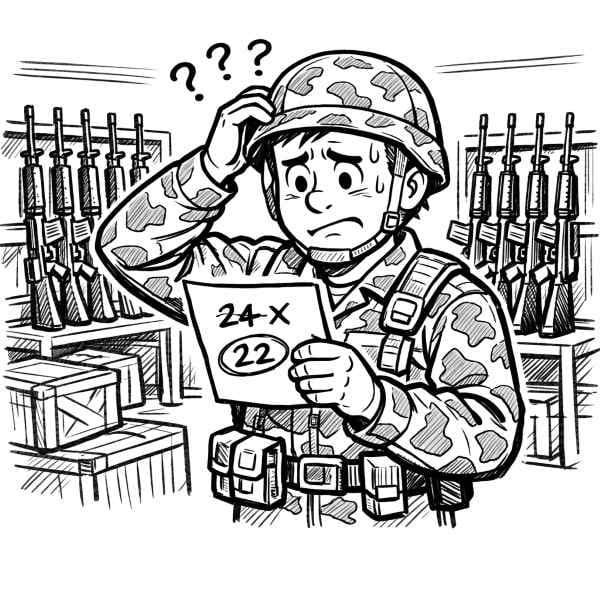
Types of Inventory Discrepancies:
- Weapons counted multiple times during physical audits
- Items missed during manual counting processes
- Weapons recorded in wrong storage locations
- Accessories and parts not properly linked to primary weapons
- Ammunition counts that don't match issued quantities
- Discrepancies between different storage locations
- Inventory drift that accumulates over time
Root Causes:
Manual counting is prone to human error, especially in large armories with hundreds or thousands of items. Personnel may be rushed, distracted, or unfamiliar with counting procedures. Weapons stored in multiple locations create complexity, and lack of real-time visibility means discrepancies aren't discovered until formal audits occur.
Prevention Strategies:
- Implement RFID or barcode scanning for accurate, rapid inventory counts
- Implement digital weapon tracking system (GOBO Weapon Tracking System) that incorporates both RFID and barcode technologies.
- Conduct regular cycle counts to identify discrepancies early
- Use two-person verification for critical inventory activities
- Maintain real-time inventory systems that update with every transaction
- Establish clear standard operating procedures for physical counts
- Deploy handheld scanners that can count hundreds of items in minutes
- Implement automated alerts when inventory falls outside expected parameters
Common Audit Failure #3: Serial Number Management Issues
Every weapon has a unique serial number that must be accurately tracked throughout its lifecycle. Serial number errors are remarkably common and can cause significant audit problems.
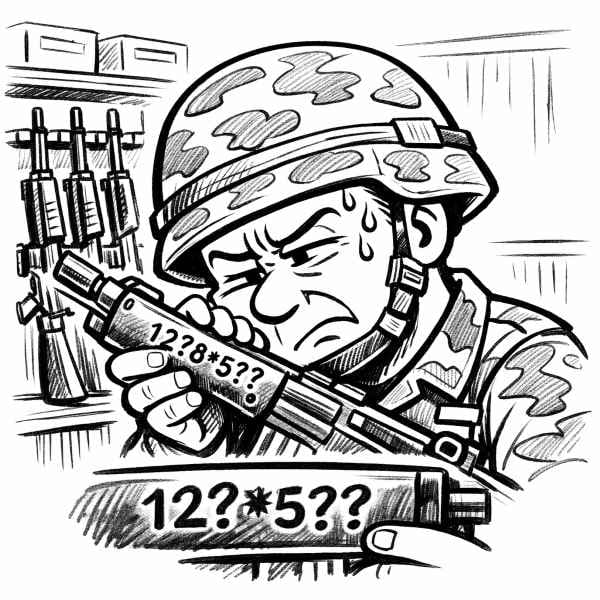
Common Serial Number Problems:
- Transcription errors when manually entering serial numbers
- Similar-looking characters confused (0/O, 1/I, 5/S)
- Serial numbers recorded in inconsistent formats
- Missing serial numbers for certain items
- Duplicate serial number entries in databases
- Inability to quickly locate weapons by serial number
- Serial numbers worn or damaged on older weapons
- Incorrect linking between weapons and their accessories
Root Causes:
Manual serial number entry is highly error-prone. Personnel may misread worn markings, transpose digits, or use inconsistent formatting. Legacy systems may lack data validation, allowing duplicate or malformed entries. Without automated capture technology, serial number accuracy depends entirely on human attention to detail.
Prevention Strategies:
- Use barcode or RFID scanners to capture serial numbers automatically
- Implement digital weapon tracking system (GOBO Weapon Tracking System) that incorporates both RFID and barcode technologies.
- Implement data validation rules to prevent duplicate or invalid entries
- Standardize serial number formats across all systems
- Create searchable databases with advanced lookup capabilities
- Photograph serial numbers for worn or difficult-to-read items
- Establish serial number verification procedures during check-in/check-out
- Conduct regular database cleanup to identify and correct errors
Common Audit Failure #4: Inadequate Access Controls
Auditors want to see that only authorized personnel can access weapons and ammunition. Failures in access control systems frequently appear in audit findings.

Access Control Deficiencies:
- Shared access codes or keys among multiple personnel
- Lack of individual accountability for access events
- Missing or incomplete access logs
- Failure to revoke access when personnel transfer or separate
- Inadequate monitoring of after-hours access
- No separation of duties between armorer and supervisory roles
- Lack of two-person control for sensitive items
- Physical security vulnerabilities (damaged locks, unsecured areas)
Root Causes:
Traditional lock-and-key systems don't provide individual accountability. Manual sign-in logs can be incomplete or falsified. Organizations may lack proper procedures for managing access permissions, and physical security systems may be outdated or poorly maintained.
Prevention Strategies:
- Implement electronic access control systems with individual user credentials
- Deploy biometric authentication for high-security areas
- Maintain automated logs of all access events with timestamps
- Conduct regular access rights reviews and remove unnecessary permissions
- Implement two-person control protocols for sensitive items
- Use video surveillance integrated with access control systems
- Establish clear procedures for emergency access situations
- Conduct regular physical security assessments
- If armory is unattended, use weapon storage systems with access control mounted on each storage unit
- Implement digital weapon tracking system (GOBO Weapon Tracking System) that incorporates integration with access control systems and also implements Biometric authentication. It also incorprates other features like automated logging of audit trails data
Common Audit Failure #5: Poor Ammunition Accountability
While weapons often receive primary attention, ammunition accountability is equally important and frequently problematic during audits.
Ammunition Tracking Challenges:
- Inaccurate manual counts of large ammunition quantities
- Missing consumption records from training or operations
- Lack of lot number tracking for quality control
- Failure to track expiration dates and rotation schedules
- Incomplete reconciliation between issued and returned amounts
- Poor documentation of ammunition destruction or disposal
- Mixing different lot numbers in storage containers
- Inadequate tracking of specialty or high-value ammunition
Root Causes:
Ammunition involves large quantities that are difficult to count manually. Operational tempo may prioritize speed over accurate documentation. Lack of automated systems means relying on manual logs that are easily forgotten under pressure. Ammunition is consumed regularly, requiring constant reconciliation that manual systems struggle to maintain.
Prevention Strategies:
- Implement weight-based or automated counting systems for bulk ammunition
- Require immediate documentation of ammunition issuance and consumption
- Track ammunition by lot number for traceability and quality control
- Implement automated expiration date monitoring and rotation alerts
- Use mobile apps for field documentation during training exercises
- Establish clear standard operating procedures for ammunition handling
- Conduct regular reconciliation of issued versus returned quantities
- Maintain separate inventory tracking for specialty ammunition types
- Implement digital weapon tracking system (GOBO Weapon Tracking System) that has all features needed to manage issuance & return of weapons and ammunition. It has features to integrate with weighing scale and capture weight at the time of issuance as well as return. The mobile app designed for firing range operations is handy app which can be used to log data quickly
Common Audit Failure #6: Lack of Real-Time Visibility
Modern auditors expect organizations to know their weapon status in real-time, not just during annual inventories. Lack of current visibility is increasingly viewed as a significant deficiency.
Visibility Gaps:
- No ability to immediately identify weapon locations
- Uncertainty about current assignment status
- Inability to track weapons across multiple locations
- No real-time alerts for policy violations or anomalies
- Delayed discovery of discrepancies (found only during annual audits)
- No dashboard or reporting for management oversight
- Inability to quickly respond to weapon-related inquiries
- Lack of integration between physical and digital tracking systems
Root Causes:
Paper-based or legacy systems don't provide real-time data. Manual processes create time lags between transactions and system updates. Lack of automated alerts means problems aren't identified until formal audits. Multiple disconnected systems prevent consolidated visibility across the organization.
Prevention Strategies:
- Implement digital weapon tracking system (GOBO Weapon Tracking System) with real-time updates
- Deploy RFID readers at key checkpoints for automatic location tracking
- Create dashboards showing current weapon status and locations
- Implement automated alerts for unusual patterns or policy violations
- Enable mobile access for field personnel to update status immediately
- Integrate all tracking systems into a single source of truth
- Conduct continuous monitoring rather than relying solely on periodic audits
- Implement geofencing to alert when weapons leave authorized areas
Common Audit Failure #7: Insufficient Maintenance Documentation
Weapons require regular maintenance, cleaning, and inspection. Poor maintenance documentation is a frequently cited audit deficiency.
Maintenance Documentation Issues:
- Missing service records for individual weapons
- Incomplete inspection logs
- Lack of scheduled maintenance tracking
- No documentation of repairs or parts replacement
- Failure to track weapons requiring service
- Missing qualifications documentation for maintenance personnel
- No tracking of weapons out of service or under repair
- Inadequate documentation of armorer actions
Root Causes:
Maintenance activities occur separately from inventory management, and documentation may use different systems. Manual maintenance logs are often incomplete. Organizations lack automated reminders for scheduled maintenance. Busy armorers may prioritize repairs over documentation.
Prevention Strategies:
- Integrate maintenance tracking into weapon management systems
- Implement automated maintenance scheduling and reminders
- Require documentation at the time of service (not retrospectively)
- Link maintenance records directly to individual weapon serial numbers
- Track weapons in repair status separately from available inventory
- Maintain digital armorer logs with timestamps and signatures
- Generate maintenance compliance reports for management review
- Document armorer qualifications and training in the system
- Implement digital weapon tracking system (GOBO Weapon Tracking System) which has dedicated maintenance and service management module to take care of maintenance documentation with real-time updates
Common Audit Failure #8: Poor Training and Procedure Compliance
Even the best systems fail if personnel aren't properly trained or don't follow established procedures. Training and compliance issues frequently surface during audits.
Training and Compliance Problems:
- Inconsistent adherence to standard operating procedures
- Staff unfamiliar with tracking system capabilities
- Lack of documented training for armory personnel
- No refresher training or competency verification
- Procedures that don't match actual operational practices
- Insufficient cross-training creating single points of failure
- Lack of supervisor oversight and quality control
- No formal consequences for non-compliance
Root Causes:
Organizations may prioritize operations over training. Procedures may be outdated, unclear, or poorly communicated. Staff turnover creates knowledge gaps. Lack of accountability for compliance means shortcuts become normalized. Systems may be complex without adequate training resources.
Prevention Strategies:
- Develop comprehensive training programs for all armory personnel
- Require documented initial and refresher training
- Create clear, practical standard operating procedures
- Implement quality control reviews and supervisor spot checks
- Establish accountability measures for non-compliance
- Provide hands-on system training with realistic scenarios
- Cross-train personnel to prevent single points of failure
- Conduct regular procedure reviews and updates
- Use system-based prompts and checklists to guide proper procedures
The Cost of Audit Failures
Failed audits carry serious consequences that extend far beyond administrative inconvenience:
- Regulatory Penalties: Fines, sanctions, or loss of operating authority
- Loss of Accreditation: Failure to meet certification standards
- Increased Scrutiny: More frequent inspections and oversight
- Operational Disruptions: Suspended operations pending remediation
- Financial Impact: Costs of investigation, remediation, and system improvements
- Reputational Damage: Loss of public trust and confidence
- Career Consequences: Disciplinary action for responsible personnel
- Security Risks: Potential for weapon theft or misuse
- Legal Liability: Exposure to lawsuits if unaccounted weapons are involved in incidents
- Mission Impact: Resources diverted from operations to audit remediation
Modern Solutions to Prevent Audit Failures
While the challenges are significant, modern technology provides powerful solutions to prevent audit failures:
1. Automated Tracking Systems
Digital weapon management systems eliminate manual entry errors, provide real-time visibility, maintain complete audit trails automatically, and ensure consistent data capture across all transactions.
2. RFID Technology
Radio frequency identification enables rapid, accurate inventory counts, automatic location tracking, hands-free check-in/check-out processes, and simultaneous scanning of multiple items without line-of-sight requirements.
3. Barcode Scanning
Barcode systems provide accurate serial number capture, prevention of transcription errors, rapid item identification, and cost-effective automated data entry.
4. Mobile Applications
Mobile apps enable field documentation during operations, on-the-spot inventory verification, offline capability with later synchronization, and improved user adoption through intuitive interfaces.
5. Cloud-Based Platforms
Cloud solutions offer multi-location visibility, automatic backups and disaster recovery, remote access for authorized users, and seamless system updates without local IT burden.
6. Analytics and Reporting
Advanced analytics provide compliance dashboards, discrepancy alerts, predictive insights for maintenance needs, and automated audit report generation.
7. Integration Capabilities
Modern systems integrate with access control, video surveillance, maintenance scheduling, and personnel management systems to create comprehensive security ecosystems.
Best Practices for Audit Success
Beyond technology, following these best practices significantly improves audit outcomes:
- Conduct Regular Self-Audits: Don't wait for external audits—identify and fix issues proactively
- Implement Continuous Monitoring: Use real-time systems that provide ongoing visibility rather than point-in-time snapshots
- Maintain Clear Documentation: Ensure every transaction is documented immediately and completely
- Establish Strong Internal Controls: Implement checks and balances to prevent and detect errors
- Provide Comprehensive Training: Invest in thorough initial and ongoing training for all personnel
- Standardize Procedures: Create clear, practical procedures and ensure consistent compliance
- Embrace Technology: Leverage modern tracking solutions to eliminate manual errors
- Foster a Culture of Accountability: Make compliance everyone's responsibility
- Address Issues Immediately: Investigate and resolve discrepancies as soon as they're identified
- Stay Current with Regulations: Monitor regulatory changes and update procedures accordingly
Why GOBO Systems for Arms and Ammunition Audit Compliance?
GOBO Systems specializes in comprehensive weapon and ammunition tracking solutions designed specifically to prevent audit failures and ensure complete compliance. Our deep expertise in armory management, combined with advanced RFID technology, makes us the trusted partner for organizations requiring mission-critical accountability systems.
Audit-Focused Design
Our weapon tracking systems are built with audit compliance at their core. Every feature is designed to address common audit failure points—from automated documentation trails and serial number verification to real-time inventory reconciliation and comprehensive compliance reporting. We understand what auditors look for and ensure your system delivers it.
Complete Accountability Framework
GOBO Systems provides end-to-end accountability covering weapons, ammunition, accessories, and maintenance activities. Our integrated platform eliminates data silos, ensures consistent documentation across all operations, and creates tamper-proof audit trails that meet the strictest regulatory requirements.
Real-Time Visibility and Alerts
Our systems deliver instant visibility into inventory status, discrepancies, and compliance issues. Real-time dashboards, automated alerts, and exception reporting enable proactive management instead of reactive problem-solving. Identify and resolve issues before they become audit failures.
Proven Audit Success Record
GOBO Systems has helped law enforcement agencies, military installations, and security organizations achieve consistently successful audits. Our clients report dramatic reductions in audit findings, faster audit completion times, and improved inspector confidence in their accountability systems.
Comprehensive Implementation Support
We provide complete implementation services including requirements analysis, system configuration, RFID tagging, user training, procedure development, and ongoing support. Our team works closely with your armory personnel to ensure smooth deployment and immediate compliance benefits.
Regulatory Compliance Expertise
Our solutions address specific regulatory requirements for weapons accountability, chain of custody documentation, and audit trail standards mandated by law enforcement standards, military regulations, and government compliance frameworks.
Achieve Audit Confidence with GOBO Systems
Learn how our Weapon Tracking System prevents audit failures, or contact us to discuss your audit compliance needs.
Conclusion
Audit failures in arms and ammunition management are common but preventable. Most failures stem from reliance on manual processes, incomplete documentation, inadequate training, and lack of real-time visibility. Organizations that experience repeated audit problems often share similar characteristics: outdated systems, insufficient resources, poor procedures, and inadequate accountability.
The good news is that modern technology has made it easier than ever to maintain compliant, accurate weapon management programs. Automated tracking systems, RFID technology, mobile applications, and cloud-based platforms dramatically reduce the risk of audit failures while improving operational efficiency.
However, technology alone isn't sufficient. Success requires combining modern tools with strong procedures, comprehensive training, consistent accountability, and a culture that prioritizes compliance. Organizations that embrace both technological solutions and operational excellence can achieve audit success while enhancing security, accountability, and mission readiness.
The stakes are too high to accept audit failures as inevitable. With the right combination of technology, procedures, and commitment, organizations can maintain complete accountability for their arms and ammunition while passing audits with confidence.
Frequently Asked Questions
Learn More
Want to learn more about preventing audit failures in your armory? Visit our Weapon Tracking System page or contact us for a consultation.
Ready to Prevent Audit Failures?
GOBO Systems provides comprehensive weapon and ammunition tracking solutions designed to ensure audit compliance and eliminate common failure points. Our RFID-based platform delivers real-time visibility, automated documentation, and complete accountability.
Key capabilities include:
- Automated serial number capture and verification
- Real-time inventory tracking and reconciliation
- Complete audit trail documentation
- Rapid physical inventory audits
- Maintenance scheduling and tracking
- Comprehensive compliance reporting
- Mobile access for field operations